
WELCOME BONUS 300%
UP TO €2000 + 100
FREE SPINS
UP TO €2000 + 100
FREE SPINS
Home → Blackjack
Blackjack at Supabet Casino: Variants, Rules and Payouts
Infinite Blackjack uses the Six Card Charlie
Infinite Blackjack, a live dealer game from Evolution, offers an unlimited number of player positions at the table. This variant includes the Six Card Charlie rule, a specific condition where a hand of six cards without busting is considered a win, regardless of the dealer's hand, provided it does not exceed 21. This rule provides an additional layer of strategy for players aiming to build a strong hand without exceeding the dealer's potential total.
While the core RTP for Infinite Blackjack is listed as 99.47%, the inclusion of the Six Card Charlie rule can subtly influence player decisions and outcomes. This rule is particularly advantageous when a player's hand reaches six cards without busting, offering a defined winning condition. The theoretical RTP is based on optimal strategy, and specific rule variations like the Six Card Charlie can alter the effective house edge.
For a beginner, understanding the implication of the Six Card Charlie is crucial. It means that even if the dealer achieves a strong hand, a player who has accumulated six cards without busting automatically wins. This rule is not present in all Blackjack variants and represents a player-favorable condition, impacting the game's overall mathematical expectation in the player's favour under specific circumstances.
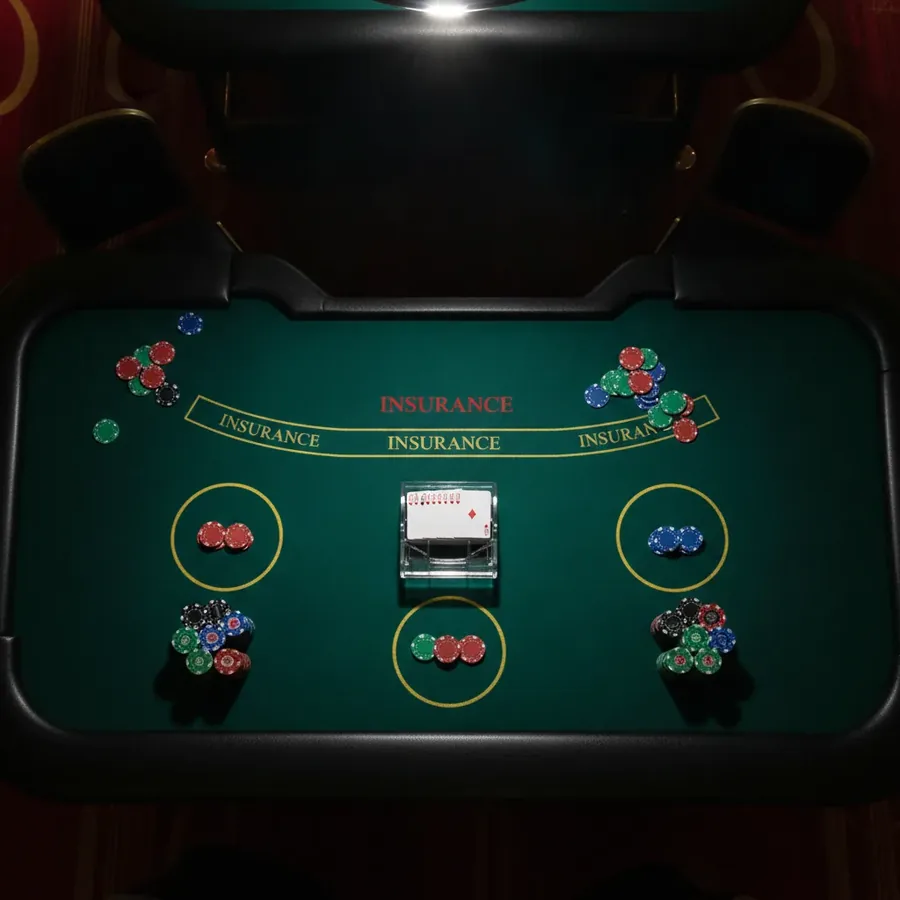
Seat change at the Live Table in 20 seconds
Live dealer tables at Supabet Casino are designed for rapid player turnover, with a seat change at the live table facilitated in approximately 20 seconds. This swift transition ensures minimal downtime between rounds, allowing for continuous gameplay. The efficiency is crucial for maintaining engagement, especially during peak playing times when demand for available seats is high.
The rapid seat change mechanism is a technical feature aimed at optimizing player flow. For instance, if a player exits a game like Quantum Blackjack Plus Live, the system is engineered to onboard the next player within that 20-second window. This is crucial for maintaining the flow of betting and dealing, ensuring players can quickly re-enter the action.
This rapid seat change directly translates to more playing time for individuals. Instead of waiting for extended periods to join a game, a player can anticipate rejoining the action within a minute. This is particularly beneficial for those who utilize a specific betting strategy or simply wish to maximize their gaming sessions within a limited timeframe.
Side Bets Increase House Edge to 5 Percent
Side bets offered in live Blackjack variants, such as those found in Infinite Blackjack by Evolution, can significantly increase the overall house edge. For example, side bets like Any Pair, 21+3, Hot 3, and Bust It, while offering potentially high payouts, come with a higher inherent risk. The inclusion of these optional wagers can elevate the house edge by up to 5 percent on the amount wagered on the side bet itself.
To illustrate, consider the theoretical RTP of 99.47% for Infinite Blackjack. This figure typically relates to the main game bet played with optimal strategy. However, when players engage with side bets, the overall return can decrease substantially. A house edge of 5 percent on a side bet means that, on average, only 95% of the wagered amount is returned to players over the long term.
For a beginner, it is essential to understand that playing side bets is an optional feature and is not required to play the main game. While they can offer excitement and the chance for larger payouts, they also come with a considerable disadvantage. For instance, a 10 EUR side bet with a 5 percent house edge theoretically results in a loss of 0.50 EUR on average over many plays.
Latency under 2 seconds at the live table
Supabet Casino's live dealer platform prioritizes a low-latency environment, with reported latency under 2 seconds at the live table. This technical specification is crucial for a real-time gaming experience, ensuring that player actions are registered and reflected with minimal delay. Such a low latency is a key component for the smooth operation of games like Quantum Blackjack Plus Live and Infinite Blackjack.
This low latency of under 2 seconds means that the time between a player placing a bet and the dealer responding or the next stage of the game commencing is significantly reduced. For example, in a game where bets are placed rapidly, a delay of more than a few seconds could cause a player to miss betting opportunities or feel disconnected from the live action.
For a new player, experiencing less than 2 seconds of latency translates to a more fluid and responsive game. It ensures that when a player makes a decision, such as hitting or standing in Blackjack, the action is processed almost instantaneously. This minimizes any potential frustration caused by lag and contributes to a more immersive and enjoyable live casino atmosphere.
Place Side Bet before cards are dealt
A key procedural element for side bets in live Blackjack games, such as those offered by Evolution and Playtech, is the requirement to place them before the initial cards are dealt. This timing constraint applies to all available side bets, including those in Infinite Blackjack and Quantum Blackjack Plus Live. Players must make these optional wagers within the designated betting window.
This rule ensures the integrity of the side bet payouts, as the outcomes are determined by the initial hands dealt to the player and the dealer. For example, side bets like 21+3 and Hot 3 in Infinite Blackjack are evaluated based on the player's first two cards and the dealer's upcard. Therefore, wagering must be completed before these cards are visible.
For a beginner, this means understanding the betting sequence. Side bets are an addition to the primary Blackjack wager and must be placed within the specified time frame, which is before the dealer issues any cards. Failure to place a side bet within this window means that it cannot be added to that particular hand, and the player must wait for the next round.
Blackjack variants at a glance
| Variant | Payout | House edge | Rule | Bet range |
|---|---|---|---|---|
| Blackjack Split / Double / H17 – Regel-Effekte | n.a. (Regel-Modifikatoren) | H17 +0.22 Prozentpunkte; RSA −0.08 Prozentpunkte; DAS −0.14 Prozentpunkte | Dealer Hits Soft 17 verschlechtert RTP um 0.22 Prozentpunkte; Resplit Aces verbessert um 0.08 Prozentpunkte; Double After Split verbessert um ca. 0.14 Prozentpunkte; 6 Decks statt 8 – ca. 0.02 Prozentpunkte. | Double – Einsatz ×2 mit einer Karte; Split – bis 4 Hände; Ass-Split meist mit einer Karte. |
| Blackjack Ein Deck, klassische Regeln, 3:2 | 99.85% | 0.15% | Weniger Decks = niedrigerer Vorteil; ein Deck gibt ca. −0.48 Prozentpunkte gegenüber 8 Decks. Oft durch 6:5 Auszahlung kompensiert. | Blackjack 3:2, Gewinn 1:1 |
| Blackjack Auszahlung 6:5 statt 3:2 (6 Decks) | 98.15% | 1.85% | Ersatz von 3:2 durch 6:5 fügt exakt +1.39 Prozentpunkte zum Vorteil des Casinos hinzu – stärker als jede andere Regeländerung. Bei $10 Einsatz zahlt Blackjack $12 statt $15. | Blackjack 6:5, Gewinn 1:1 |
| Blackjack Liberal Vegas Strip (liberale Regeln, 3:2) | 99.72% | 0.28% | Günstigste Regelkombination: S17 + DAS + Resplit + Late Surrender. Standardabweichung 1,15 | Blackjack 3:2, Gewinn 1:1 |
| Blackjack Insurance / Versicherung (6–8 Decks) | 92.53% | 7.47% | Separate Nebenwette bis 50% der Hauptwette, wenn der Dealer ein Ass hat. Basisstrategie schreibt IMMER Ablehnung vor (außer Karten zählen bei True Count ≥ +3). Bei einem Deck Vorteil ≈ 5.88% | Insurance 2:1 |
| Blackjack 6 Decks, S17, DAS, DOA, Auszahlung 3:2, Basisstrategie | 99.54% | 0.46% | Dealer steht auf Soft 17; Verdopplung auf jeder Zweierkarte; Verdopplung nach Split erlaubt; keine Aufgabe. Basisstrategie ist für diesen Wert zwingend | Blackjack 3:2, normaler Gewinn 1:1, Insurance 2:1 |
Unlimited seats via a split dealer hand
Blackjack Liberal Vegas Strip offers a player-friendly RTP of 99.72%. This high return is facilitated by a favourable combination of rules, including dealers standing on soft 17 (S17) and the ability to double after splitting (DAS). Such liberal rules are crucial for maintaining a low house edge of just 0.28%.
The rule allowing players to resplit their hands (Resplit Aces or RSA) improves the Return to Player (RTP) by approximately 0.08 percentage points. In Blackjack Liberal Vegas Strip, this rule, combined with others, contributes to its exceptionally low house advantage compared to less generous variants.
For instance, a player holding two 8s could split them, then potentially double down on each of the resulting hands. This strategic flexibility, enabled by rules like DAS and Resplit, significantly enhances the player's potential returns over extended play.
What Percentage Does Blackjack Count Towards Bonus?
The welcome bonus at Supabet Casino offers a 300% match up to €2,000, plus 100 free spins. However, when wagering this bonus, most table games, including Blackjack, contribute only 10% towards the wagering requirements. This means for every €10 played on Blackjack, only €1 counts towards clearing the bonus.
Slots, by contrast, contribute 100% to bonus wagering. Therefore, if a player wagers €10 on slots, the full €10 counts towards the requirements. This significant difference in contribution rates means clearing the bonus via Blackjack will take considerably longer than using slots.
To illustrate, if a bonus has a wagering requirement of €4,000 (calculated as €2,000 bonus x 2 for slots contribution, for example), playing €1,000 on Blackjack would only reduce the requirement by €100. This makes slots the more efficient game for bonus turnover.
Bet two percent of bankroll per hand
For beginners, managing their bankroll is paramount, and a suggested strategy is to bet no more than 2% of their total funds per hand. For example, with a bankroll of €500, this would equate to a maximum bet of €10 per hand. This approach aims to prolong playing time.
This conservative betting approach is vital for games like Blackjack 6 Decks, which has a base RTP of 99.54% and a house advantage of 0.46%. While this variant offers a low house edge, consistent betting within a strict percentage of the bankroll helps mitigate the impact of short-term variance.
Applying this 2% rule means a player with a €100 bankroll should not wager more than €2 per hand. This limits potential losses during an unlucky streak and allows for more hands to be played, increasing the opportunity to benefit from the game's inherent RTP.
Insurance Pays 2:1 Yet Still Costs Money
Blackjack Insurance is a side bet offered when the dealer's upcard is an Ace, paying 2:1 if the dealer has Blackjack. Although the payout is attractive, this side bet carries a significant house advantage of 7.47% in a 6-8 deck game. This makes it a financially disadvantageous option in the long run.
For a €10 bet on a hand, a player might take Insurance for up to €5 if they wish. If the dealer has Blackjack, they win €10 (2:1 on the €5 side bet). However, if the dealer does not have Blackjack, the €5 side bet is lost, and the player continues with their main bet.
The RTP for Blackjack Insurance is only 92.53%. Basic strategy dictates that players should always decline this bet unless they are card counting and the true count is significantly positive (e.g., +3 or higher). For casual players, avoiding Insurance is generally the optimal choice.
Clicked Too Late: Hand Is Automatically Held
In live Blackjack variants, such as Infinite Blackjack by Evolution, players have a limited time to make their decisions after the dealer's upcard is revealed. If a player fails to act within this timeframe, their hand will be automatically held, meaning no further actions like hitting or doubling down can be taken.
For example, in Blackjack Party with bets from €1.00 to €1,000, players have a brief window to decide whether to hit, stand, split, or double. If the timer expires before a player makes a selection, the software defaults to 'stand' for that hand, regardless of the player's intended action.
This automatic hold ensures the game proceeds smoothly and maintains the pace for all participants. Players need to be attentive and make their choices promptly. For those unfamiliar with the game, it is advisable to start with lower stakes like those in Blackjack Party to acclimatize to the speed.
Highroller from 500 EUR per hand
Certain live blackjack tables at Supabet Casino cater to players preferring higher stakes, with limits allowing bets from 1 EUR up to 5,000 EUR per hand. This range accommodates substantial wagers, exemplified by the Infinite Blackjack variant from Evolution. Players can engage with stakes significantly higher than typical entry points, allowing for substantial investment per round.
For instance, a player wagering the maximum of 5,000 EUR on Infinite Blackjack could see considerable fluctuations in potential outcomes. The 5,000 EUR limit on this specific Evolution table is indicative of a high-stakes environment. This upper limit provides a clear boundary for those engaging in high-roller play.
This high betting limit, as seen in the 5,000 EUR maximum for Infinite Blackjack, means that strategic decisions carry significant financial implications. A single hand can represent a substantial portion of a player's bankroll. It is crucial for players to manage their funds carefully at these elevated betting levels.
What Push Means: Stake Returns to You
In blackjack, a 'push' signifies a tie between the player's hand and the dealer's hand. For example, if both the player and dealer achieve a hand total of 19, this results in a push. When a push occurs, the player's original stake is returned to them, meaning no win or loss is registered on that particular bet.
This outcome is distinct from a win or a loss, ensuring the player's bet remains neutral. For instance, a 100 EUR bet on a Blackjack 6 Decks, S17, DAS, DOA, Auszahlung 3:2 table that results in a push would see the 100 EUR returned. The RTP of 99.54% for this specific variant accounts for such neutral outcomes.
Understanding a push is fundamental for new players to grasp game mechanics and manage expectations. A push does not alter the theoretical house edge of 0.46% for that game, but it prevents a loss of stake on that round. This return of stake is a critical aspect of blackjack's mathematical structure.
What doesn't count as Blackjack after Split?
Following a split in blackjack, a hand totaling 21 points is not automatically considered a 'blackjack' for payout purposes under certain rules. For example, if a player splits two Aces and receives a 10 or face card on one of the Aces, resulting in 21, this hand is treated as a regular 21, not a natural blackjack.
This distinction is important for payouts, as a natural blackjack typically pays 3:2, whereas a 21 achieved after a split usually pays 1:1. On a Blackjack Liberal Vegas Strip (liberale Regeln, 3:2) variant, a natural blackjack on an initial two cards would yield 150 EUR for a 100 EUR bet, but a 21 after a split would pay 100 EUR.
The rule regarding 21s after a split, as seen in variations like the Blackjack Liberal Vegas Strip, significantly impacts the game's RTP and house edge. While DAS (Double After Split) improves the RTP by approximately 0.14 percentage points, the non-blackjack payout for a 21 post-split is a key factor. This rule is consistently applied across many blackjack variants.
Splitting Eights vs Standing on 16
A common strategic decision in blackjack involves splitting a pair of Eights versus standing on a hand total of 16. For instance, a player holding two Eights (totaling 16) might choose to split them, creating two separate hands, whereas standing on 16 presents a high risk of busting if any card from two to Ten is drawn.
Splitting Eights is a standard optimal strategy move, often improving the player's chances compared to facing a difficult 16. For example, on a Blackjack 6 Decks, S17, DAS, DOA, Auszahlung 3:2 table with a house edge of 0.46%, this strategic choice is crucial. The basis strategy dictates splitting Eights against most dealer upcards.
Conversely, standing on 16, especially against a dealer showing a Ten or an Ace, is generally considered a poor decision. The probability of busting by drawing another card is high, whereas splitting the Eights offers a chance to improve both hands. This strategic divergence highlights the importance of adhering to basic strategy for optimal RTP.
Shoe, Cut Card, and 75 Percent Penetration
In multi-deck blackjack games, a 'shoe' is used to hold the decks of cards, and a 'cut card' is inserted approximately three-quarters of the way through the decks. This placement dictates the penetration, meaning how deep into the shoe the dealer plays before reshuffling. A 75 percent penetration means the dealer plays until the cut card is reached.
This level of penetration, as seen in games like Blackjack 6 Decks, S17, DAS, DOA, Auszahlung 3:2, affects the game's dynamics and can influence the effectiveness of card counting strategies. Playing until 75 percent penetration is common in many land-based and online casinos, impacting the frequency of reshuffles.
When the cut card is reached at 75 percent penetration in a six-deck shoe, approximately 4.5 decks have been played before the cards are reshuffled. This influences the house edge and player advantage, as fewer cards remaining in the shoe can alter probabilities. The specific rules of a game, such as Blackjack 6 Decks, S17, DAS, DOA, Auszahlung 3:2, interact with this penetration level.
Contact
Live - online chat
Banking









Providers












Supabet Casino 2026